Should you do a PhD?
Been there. Done that. Here’s what I have to say about it.
A PhD is no small accomplishment. In fact, to me, a PhD is like playing the long-game. Running a type of marathon.
And you best know what you want out of it before you commit to it.
In Canada, PhDs typically take anywhere from 4 to 6 years or more to complete. That is a long time to dedicate yourself to something, especially when a lot of people don’t even stay at jobs for that long.
Many people choose to do a PhD in their 20s and early 30s. I fall right into that category and so I’m writing this post to share my reflections from that point of view.
A PhD is filled with trade-offs
When I say that you best know what you want out of a PhD, I seriously mean it. Do you have aspirations to be a professor? An academic? Work for R&D at a company? Advise the government? Is having a PhD a requirement in job postings of your ideal job? Or do you foresee it being a game-changer for your future career?
Being clear on your goal is a must-have when making a decision to pursue a PhD or not. The why is what will drive you forward to the finish line. Without a clear why, a PhD will feel like an interruption to other life plans.
Many things happen in your 20s and early 30s. For some, it could be quick career progressions or starting a company. For others it could be starting a family, buying a house or getting married.
I certainly saw all of this happening in my friend group while I was pursuing my PhD.
And so, you need to be confident that doing your PhD is the right path for you so you can pursue it without resentment or regret.
It’s true that you can still have a family, buy a house and do many wonderful things while doing a PhD. But you can also do those things without the additional layer of pursuing a PhD degree.
An outlet to be a free thinker
This to me is one of the biggest advantages of doing a PhD.
In many jobs, you will be following a pre-set agenda.
And I think it is quite rare to find an outlet where you can truly invest yourself in something that you have full autonomy over from start to finish.
A PhD is an incredible outlet to solve problems that you are interested in, trying new things out and developing new technology. Maybe even starting a spin-off company from your research.
And not only that, a PhD creates space where you can speak independently based on what you know, your research and expertise.
At the same time, that level of freedom can feel daunting. What do you focus your attention on today? How do you structure yourself to push forward on your tasks today to achieve those long term goals?
Pursuing a PhD requires perseverance and, to me, it also requires remarkable self-discipline as there is nobody watching over your shoulder on the day-to-day to make sure you’re doing the work. You are the one pushing yourself day in and day out.
The right support system
My family came along this PhD journey with me. They were the ones I called to discuss a new idea or check my judgement.
The support systems at your academic institution are also essential. Whether that is in offering you work prospects to finance a PhD or help you in crafting excellent scholarship applications so you can self-fund your work. All of that matters a lot.
In my case, without both support systems, I would not have pursued a PhD. The numbers and the work environment all had to make sense. The support of my family helped me stay grounded.
The end of the road might feel underwhelming if you are not clear on your goals or set unrealistic expectations
A PhD does not guarantee a very high paying job right away. Or ensures that everyone sees you as an expert right away.
In my experience, a PhD can help position yourself for a job, potentially make you stand out given your unique knowledge and expertise. But, if you are looking to step outside of academia, in this job market, work experience weighs a lot.
And so, yes a PhD positions you well as an expert, but experience will boost your credentials further. Trust takes time to build in any new work environment, PhD or not.
So, was it worth it?
When I decided to do my PhD, I was inspired by women who were thought leaders in the climate space and were working outside of academia. Seeing them as examples helped me see a PhD with a different lens. A PhD can position you for careers both inside and outside academia.
At the same time, opportunities presented themselves which I turned down while doing my PhD.
But at the end of the day, my PhD taught me how to think big since I focused on climate risk governance. I also became quite good at absorbing and synthesizing a lot of information. Uncertainty became my friend. And I was presented with opportunities that would have otherwise been hard to come by in another setting, like being a panelist on a TV show focused on flood risk prevention.
All in all, I accomplished a lot of what I set out to do. But I know the PhD path is not for everyone, so I hope these reflections from my experience are helpful to decide whether this is the right next step for you.
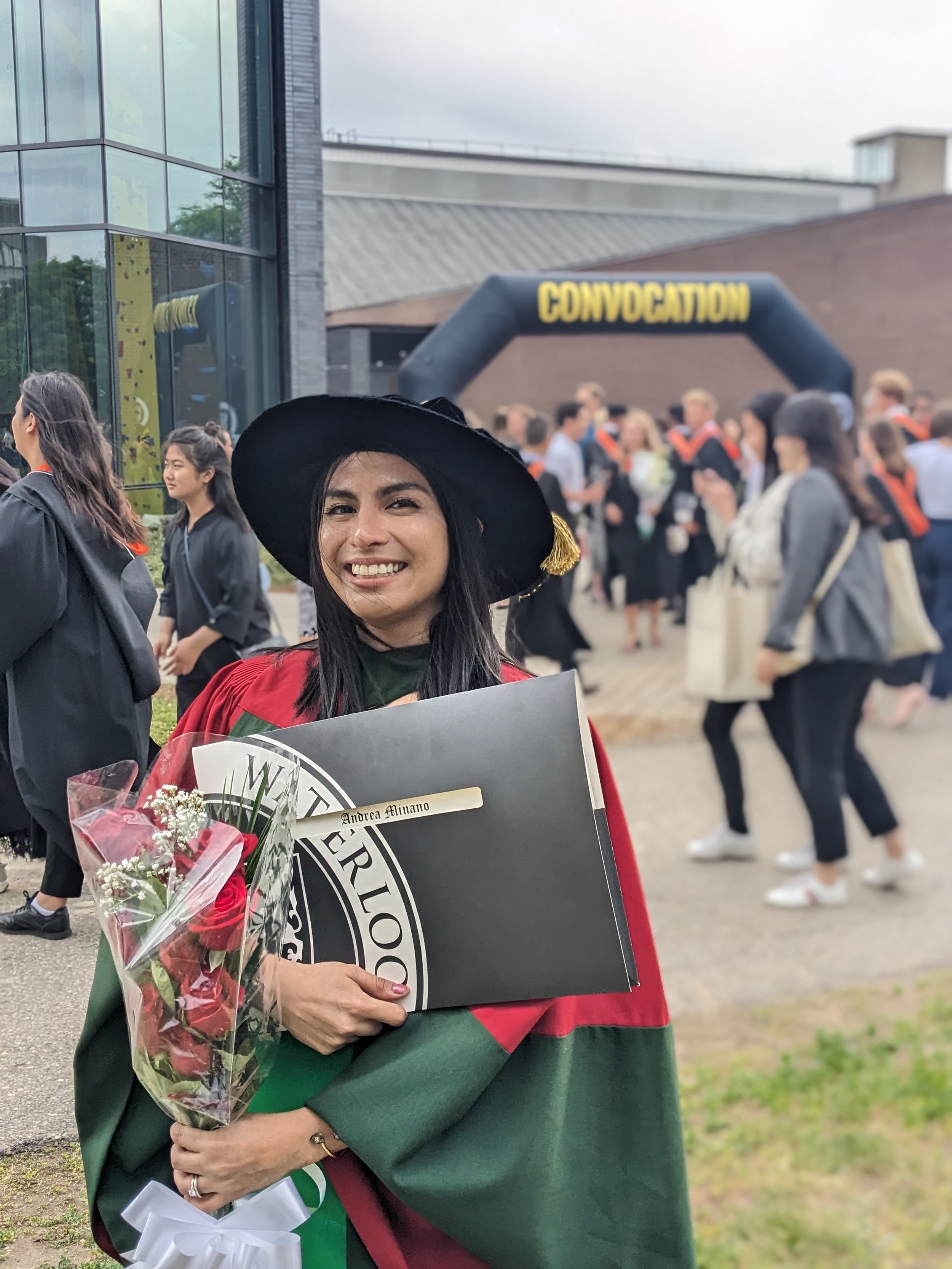
2 years later, I still like the hat!